
The short answer
- Assess rule-driven intake, integration access and ownership against the workflow you need to operate.
- Consider Feathery when the intake flow needs a documented rule-driven API lookup or validation.
- The rendered pricing view directs buyers to a demo; a hidden page table lists a Free offer. Confirm availability, limits and the quote for the actual workflow.
Map the intake and the API action
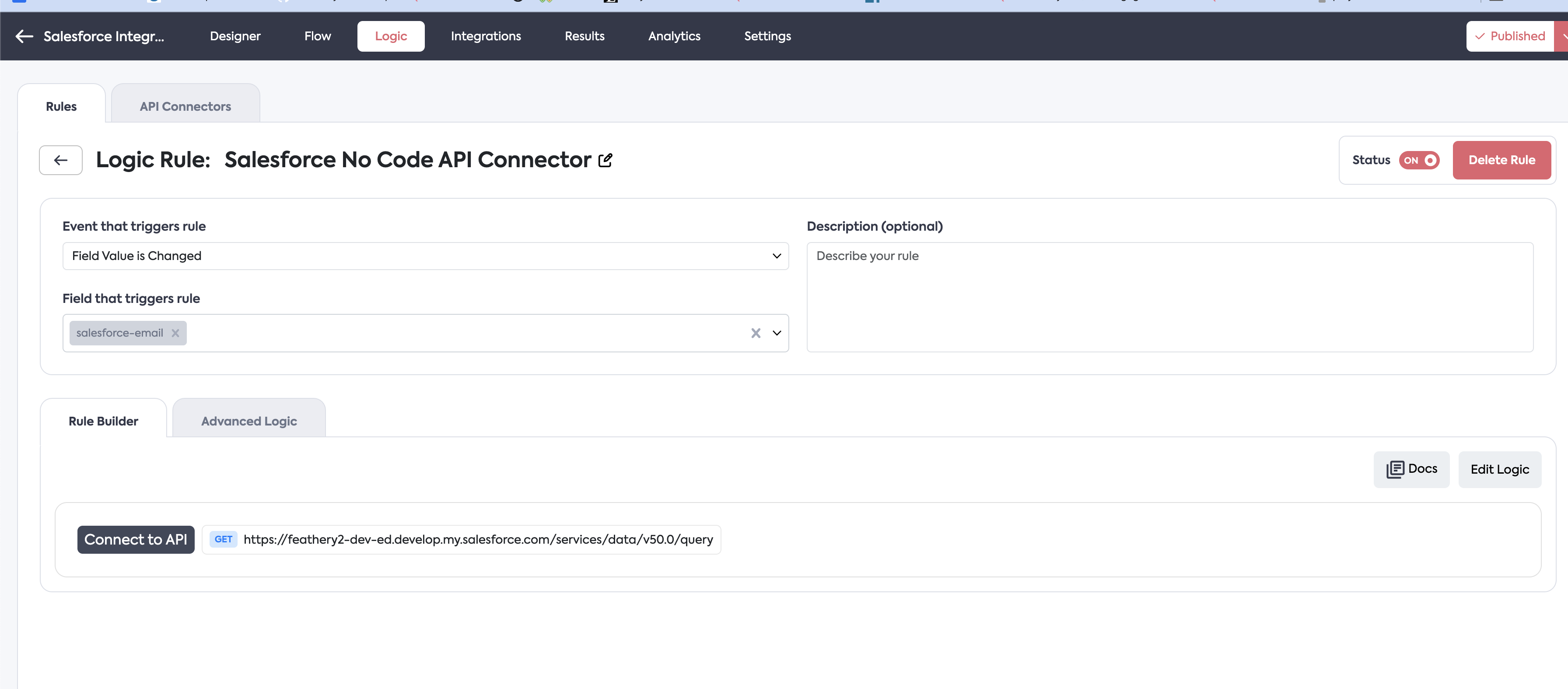
Feathery’s API action documentation describes rule-based connectors for tasks such as lookups and custom validation. Consider it when an intake flow must use data from another system before deciding what to show or submit.
Draw the sequence for one synthetic applicant: identify the field, the lookup, the expected branch and the destination update. Specify what happens when a record is missing or the API returns an error. The documented ability to call an API does not establish that a particular integration or mapping meets your requirements.
Ask for current packaging
Feathery’s pricing page showed a sales-led demo view when checked. A hidden table in its page markup lists Free at $0, 500 monthly submissions and five live forms, but that offer was not visible in the rendered view. Confirm current availability, limits and pricing. The FAQ says a person who resubmits the same form within the same month is counted as one user; ask how your account’s usage is counted.
The same page presents a sales-led intake and workflow offering, custom API connections and standard versus à-la-carte premium integrations. Request an itemized quote for the actual connection, editors, live workflows, expected volume, contract term and support.
An account and billing FAQ describes monthly active submitting users, deduplication and limits on live forms. That documentation may reflect older packaging; it does not establish the current price or allowance. Ask Feathery which unit and limit the proposed contract uses, including how repeat submissions and partial responses count.
Test failure and partial progress
For a synthetic record, exercise a successful lookup, a missing record, a timeout and a rejected update. Compare the form state with the destination and record who can see and resolve each failure. Ask whether retries occur, what triggers them and how duplicate writes are prevented; the sources here do not establish a retry or idempotency guarantee.
Agree what an unfinished form should save, who can retrieve it and when a downstream action should fire. Confirm partial-response availability and plan requirements in the quote rather than assuming a draft, partial submission and completed submission are billed or delivered alike.
Keep credentials and ownership clear
The API action guide describes references to integration tokens in connector configuration. Keep credentials out of form URLs, screenshots and public test records. Review who can edit connections, rotate credentials and inspect errors in the client’s account.
Before handoff, inventory the form, response history, workflow rules, connections and destination owner separately. Ask for export formats and a demonstration of the client taking over a synthetic workflow. A form copy alone is not evidence that rules, credentials or response history will move.
Compare by the work to be done
For straightforward collection, compare Tally and its fair-use terms. For connected-record updates, review Fillout. Typeform may fit a form-led lead workflow where its response allowance and mapping are sufficient. The form builder guide gives a common handoff checklist.
Common questions
Does Feathery offer a free plan?
A hidden table in Feathery’s pricing page lists Free at $0 with 500 monthly submissions and five live forms, but the rendered view showed a sales-led demo instead. Confirm current availability and account terms.
Does an API action guarantee retries?
The cited API action guide describes connectors; it does not establish a retry or idempotency guarantee. Confirm and test the behavior.
What should be in the quote?
Ask for the required integrations, editors, live workflows, usage unit, partial responses, contract term and support.
Sources and scope
We read the linked vendor pricing and documentation on November 5, 2026.
We have not tested these products, integrations, account access or migrations. Confirm the current plan, contract and behavior for your organization.
Sponsorship never changes this page. How we research.
Sources
- Feathery pricing
Checked 2026-11-05. Rendered sales-led pricing view, conflicting hidden plan table and FAQ usage counting; confirm current offer.
- Feathery connect to API action
Checked 2026-11-05. Rule-based API connectors, lookup and token references.
- Feathery account and billing FAQ
Checked 2026-11-05. Older billing documentation describes monthly active users and live forms; current contract needs confirmation.
Images in the header
- Rule triggered by a field change with an API action
Feathery's own image from docs.feathery.io, fetched November 5, 2026. Figures in it are the vendor's examples, not our results.